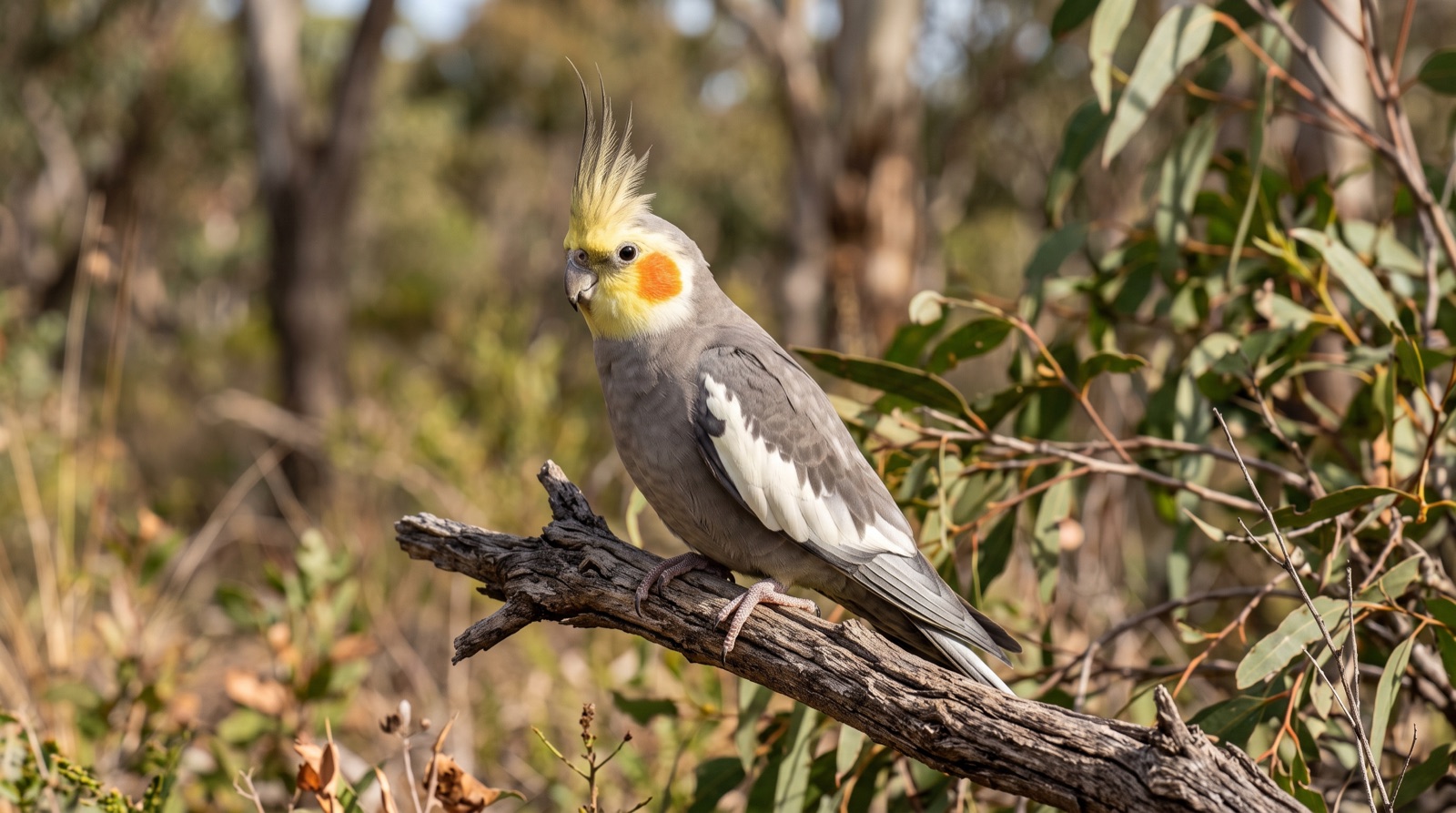
The most popular companion parrot after the budgerigar, and the smallest member of the cockatoo family.
Quick facts
| Scientific name | Nymphicus hollandicus |
| Origin | Arid and semi-arid interior of Australia |
| Length | 30–33 cm (12–13 in) including tail |
| Weight | 80–100 g (2.8–3.5 oz) |
| Lifespan | 15–25 years |
| Noise level | Low to moderate |
| Experience | Beginner |
| Conservation | Least Concern |
Temperament
Gentle, affectionate and far less demanding than their larger cockatoo relatives, though they share the crest and the feather dust. Males typically whistle and mimic more than females; many learn tunes rather than words. They enjoy head scratches and generally tolerate handling well.
Care
Cockatiels are prone to night frights — sudden panicked thrashing in darkness — and a dim night light in the bird room prevents most injuries. As with all small parrots, an all-seed diet is the primary avoidable health risk; convert to pellets with fresh vegetables. Their dust means air filtration is worth considering in shared living spaces.
Notes
Taxonomically a cockatoo, placed in the family Cacatuidae rather than with the true parrots, despite a size and manner that suggest otherwise.