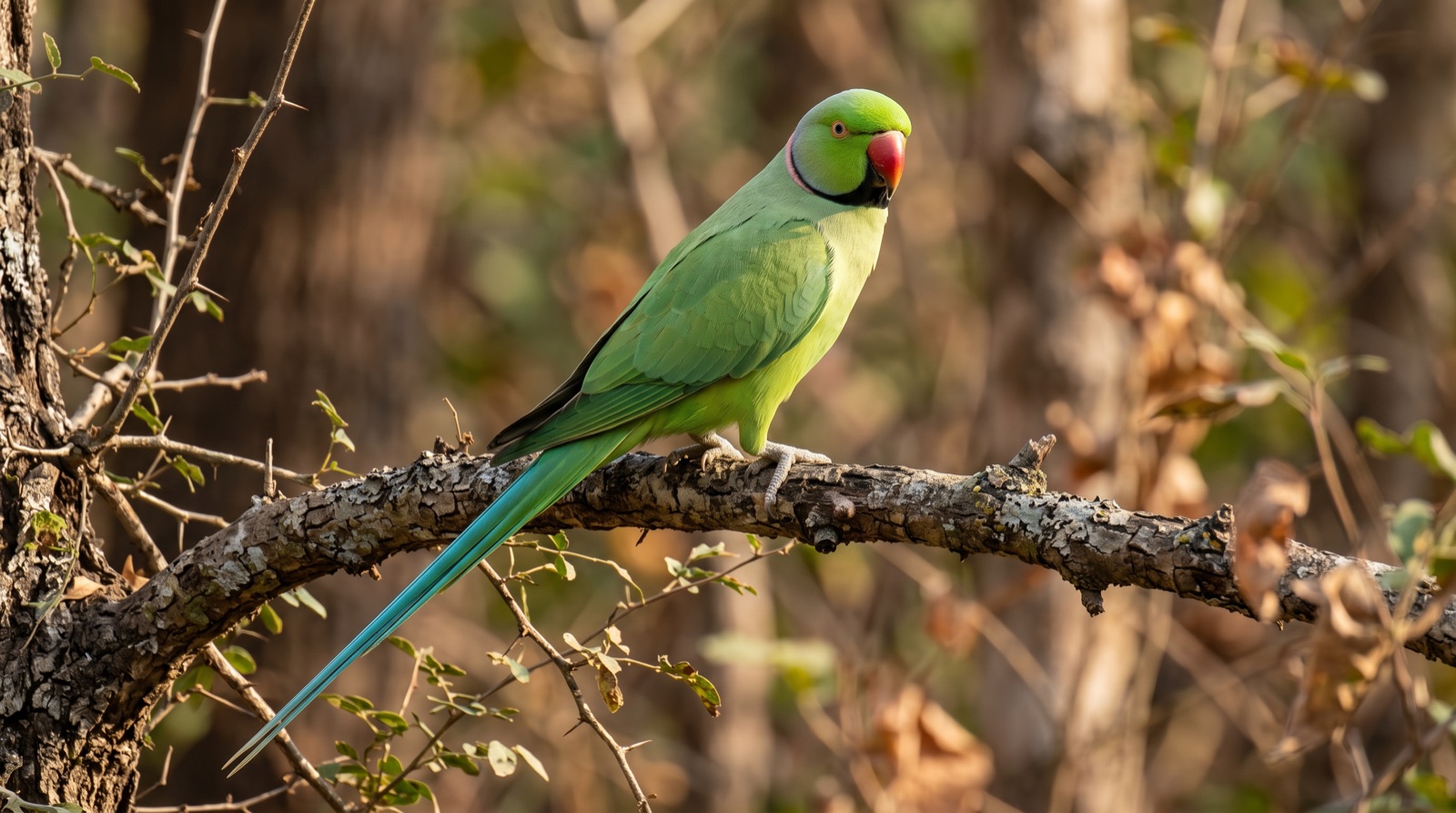
Elegant, long-tailed and articulate, with an adolescent phase that catches a lot of owners off guard.
Quick facts
| Scientific name | Psittacula krameri manillensis |
| Origin | Indian subcontinent; the wider species also native across sub-Saharan Africa |
| Length | 40 cm (16 in) including tail |
| Weight | 115–140 g (4–5 oz) |
| Lifespan | 25–30 years |
| Noise level | Moderate to high |
| Experience | Intermediate |
| Conservation | Least Concern |
Temperament
Ringnecks are clear, capable talkers and can be very affectionate, but they are also known for a pronounced bluffing phase in adolescence — a period of lunging and biting that typically arrives around a year old and passes with consistent, unpanicked handling. Owners who withdraw during this phase often end up with a permanently untame bird.
Care
The long tail means cage width and perch placement need real thought; a cage that suits a similarly weighted conure will leave a Ringneck with damaged tail feathers. Otherwise standard: pellets, fresh produce, daily interaction and foraging enrichment.
Notes
Males develop the neck ring at around three years; females and immature males lack it, so young birds cannot be reliably sexed by appearance. Feral populations are now well established across western Europe, including large roosts in London and Brussels.