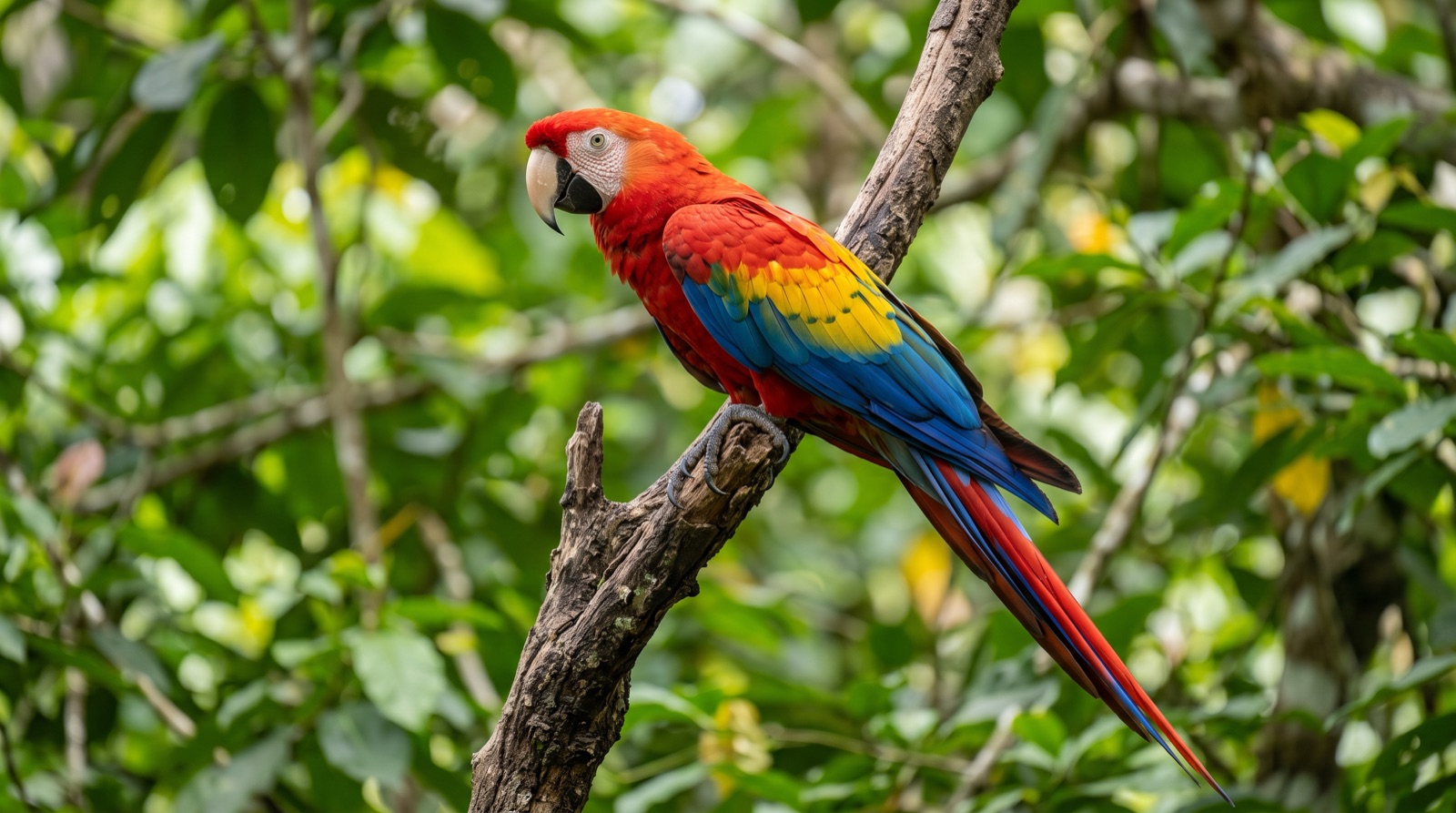
Scarlet, yellow and blue in sharp bands — the most visually dramatic macaw, and generally the most temperamentally demanding.
Quick facts
| Scientific name | Ara macao |
| Origin | Southern Mexico through Central America to the Amazon basin |
| Length | 81–96 cm (32–38 in) |
| Weight | 900–1100 g (2–2.4 lb) |
| Lifespan | 40–50 years |
| Noise level | Very high |
| Experience | Advanced |
| Conservation | Least Concern |
Temperament
Scarlets are widely regarded as more excitable and more prone to nippiness than Blue-and-Golds, particularly as they mature. They bond intensely and can become territorial about a chosen person. None of this makes them bad companions, but it does mean consistent training from the start rather than correction after problems appear.
Care
Requirements broadly match other large macaws: a very large enclosure, heavy chewing material, and a diet built on a quality large-parrot pellet supplemented with fresh produce and a measured quantity of nuts. Their plumage is prone to looking dull without adequate bathing, so frequent showers or misting matter more here than in some species.
Notes
Central American subpopulations have declined sharply even though the species as a whole is listed Least Concern. Range-wide status can hide serious regional loss.