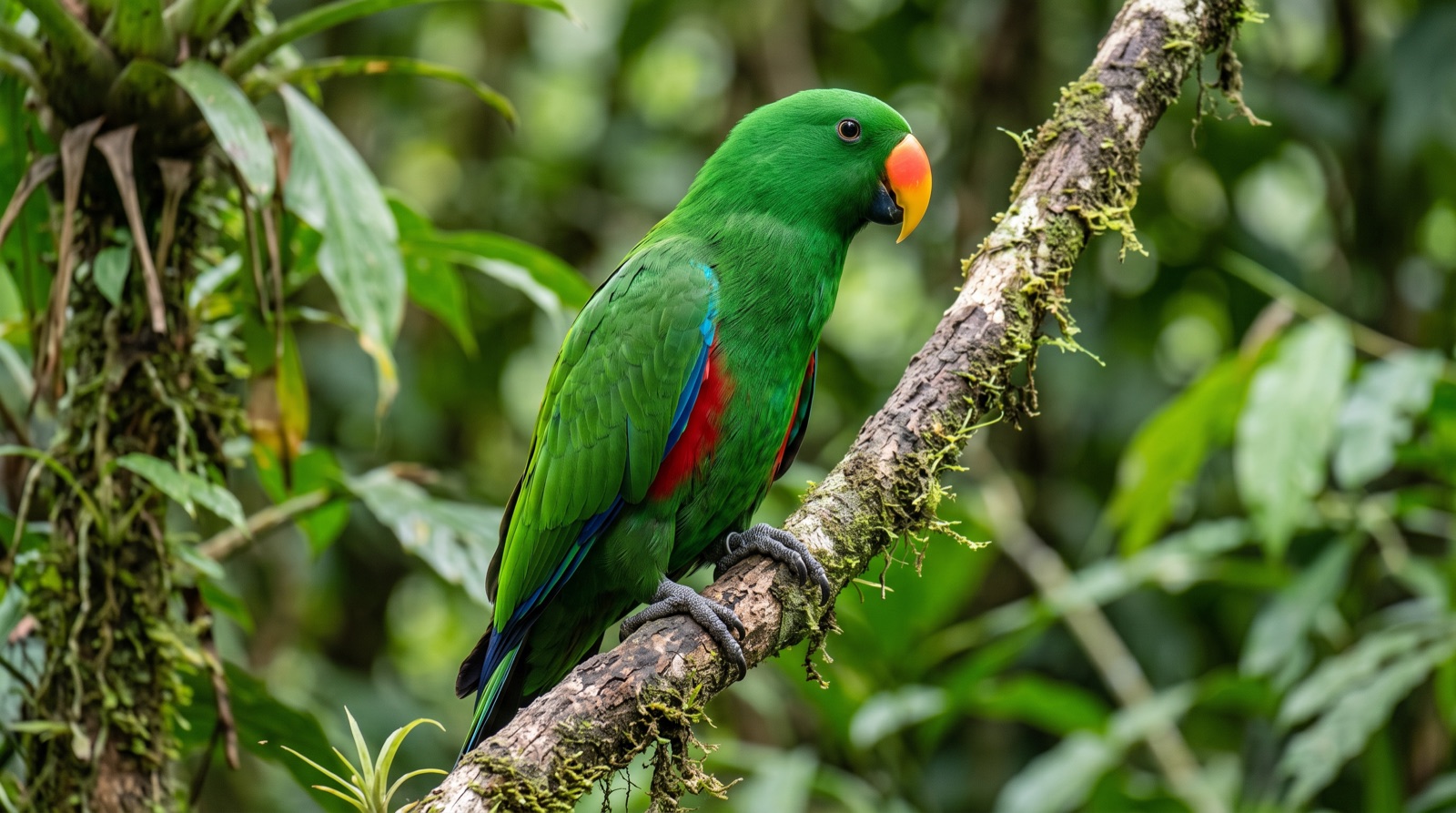
Males emerald green, females crimson and blue — so different that they were described as separate species for over a century.
Quick facts
| Scientific name | Eclectus roratus |
| Origin | Solomon Islands, New Guinea, north-eastern Australia and the Maluku Islands |
| Length | 35 cm (14 in) |
| Weight | 400–550 g (14–19 oz) |
| Lifespan | 30–50 years |
| Noise level | Moderate |
| Experience | Intermediate to advanced |
| Conservation | Least Concern |
Temperament
Calm and comparatively placid, with a measured manner that sets them apart from the more frenetic conures and cockatoos. They are capable talkers with unusually clear voices. Females are generally the more assertive and territorial sex, reversing the pattern seen in many parrots.
Care
Eclectus have an unusually long digestive tract and their dietary requirements genuinely differ from other parrots. The standard recommendation is a high-fibre, low-fat diet built heavily on fresh fruit and vegetables, avoiding heavily fortified pellets. Excess supplementation is widely blamed among keepers for the toe-tapping and wing-flipping seen in the species, though the evidence remains anecdotal rather than established.
Notes
The sexual dimorphism is among the most extreme of any bird. Early ornithologists classified males and females as separate species, and the error persisted well into the twentieth century.