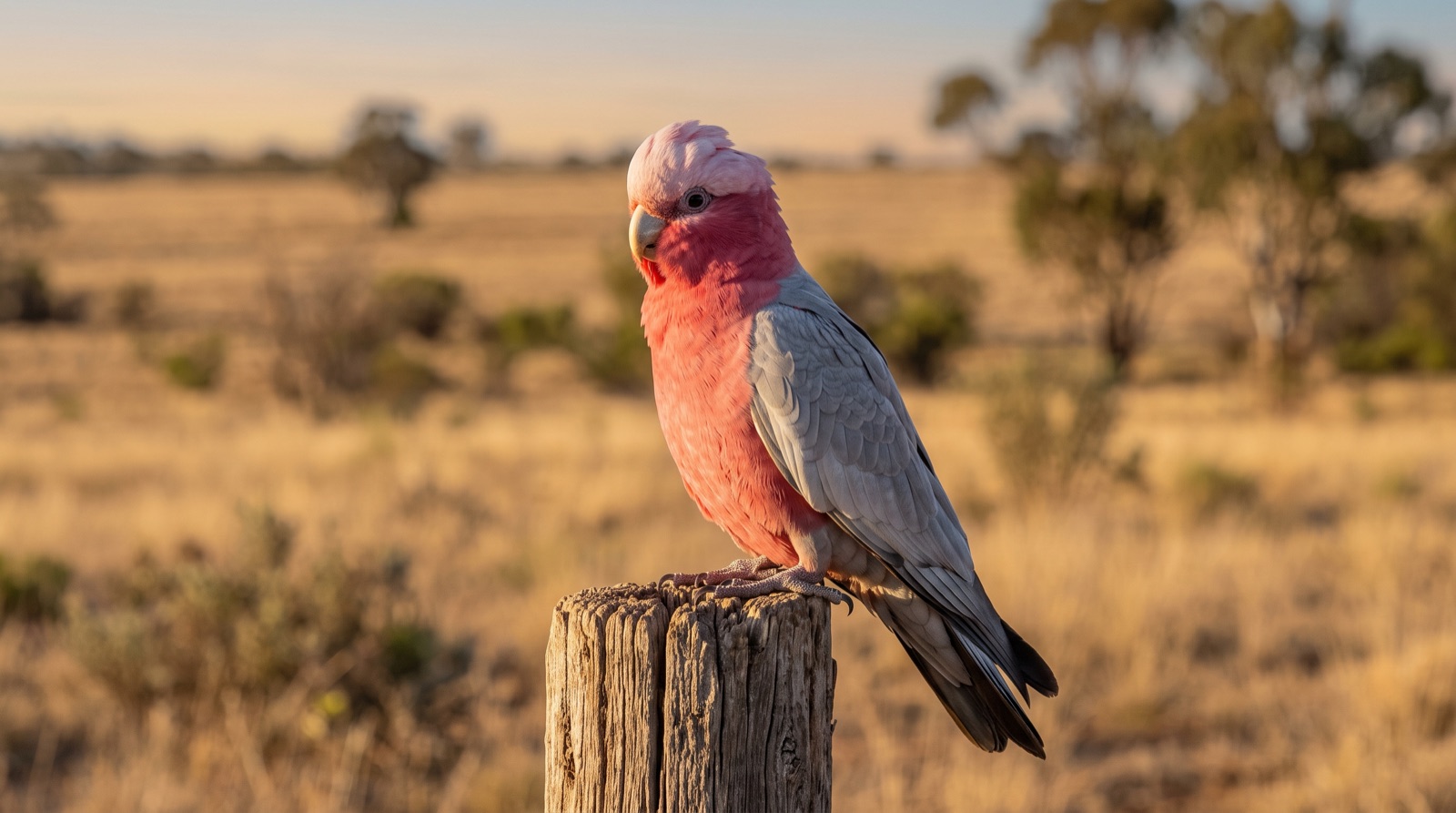
Rose-pink and grey, smaller and more manageable than the large white cockatoos, and prone to one specific diet-related problem.
Quick facts
| Scientific name | Eolophus roseicapilla |
| Origin | Widespread across mainland Australia |
| Length | 35 cm (14 in) |
| Weight | 270–350 g (9.5–12 oz) |
| Lifespan | 40+ years |
| Noise level | Moderate to high |
| Experience | Intermediate |
| Conservation | Least Concern |
Temperament
Often described as the most robust and least neurotic of the commonly kept cockatoos. Galahs are playful, comfortable with handling, and generally less prone to the intense dependency seen in Umbrellas — though they are still cockatoos and still highly social.
Care
The species-defining husbandry issue is fat. Galahs are strongly predisposed to obesity and to lipomas, and a seed-heavy or nut-heavy diet will produce both. A low-fat pellet base with generous fresh vegetables and only occasional seed is the standard recommendation. Flight and active foraging matter here as weight management, not just enrichment.
Notes
Common and increasing in Australia, where they are often treated as an agricultural pest. Their status in the wild is very different from their standing as a companion bird elsewhere.